Compare
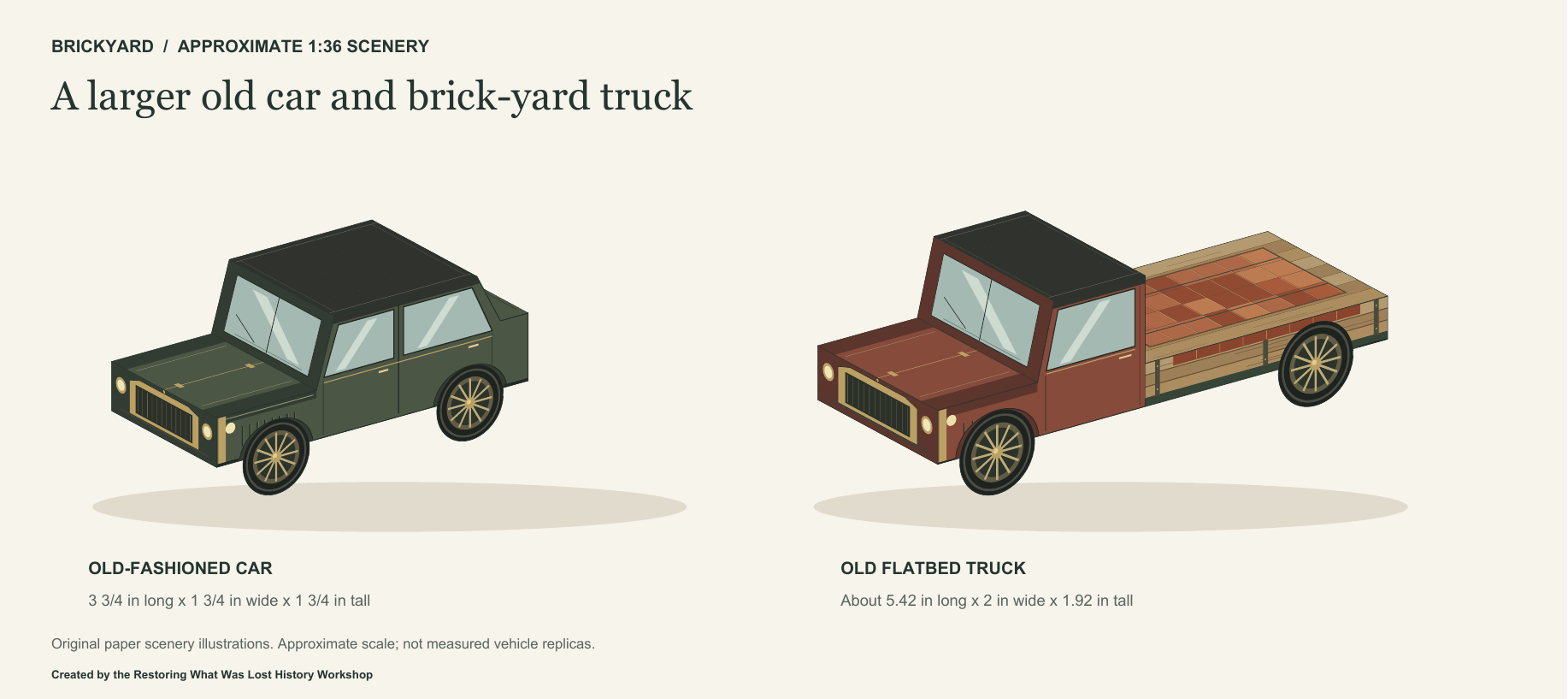
List two differences between the car and truck. Which differences help carry people, and which help carry a load?
Compare a Model T-style passenger car with a flatbed work truck, then give each a role in your miniature scene.
Created by the Restoring What Was Lost History Workshop
Free educational use. Times are estimates; allow extra time for drying, practice, and younger builders.
Use these stages to plan your work alongside the instructions inside the model PDF.
Match its two illustrated sides with the roof strip on the following page. Score the blue folds, then cut around the outlines with the pale tabs still attached.
Bend the strip to match the side outline. Fold the side tabs behind the pictures so both printed side faces remain outside.
Start at the roof tabs, then work along the windshield and hood. Follow the back, close both ends, and attach the other side in the same way. The PDF illustration shows how the shapes meet.
The bottom stays open and the printed wheels remain part of the flat sides. Add the optional brace if the sides need support. Allow the shell to dry before adding scenery.
List two differences between the car and truck. Which differences help carry people, and which help carry a load?
Give each vehicle a job in your model brickyard. What would it carry, and where would it stop?
Study a period truck brochure. What can it tell you about a vehicle’s design? What further evidence would you need to say a particular brickyard owned one?
Spend 5 minutes noticing the model, 10 minutes exploring the historical context, 20 minutes on a first building stage or measurement activity, and 10 minutes sharing observations. Plan additional sessions for finishing longer builds. The teacher handout includes a lesson plan and learner pages.
The Henry Ford’s collection includes a 1918 Ford truck brochure and places the first Model TT in July 1917. Our car and truck are representative paper scenery. The truck is not a measured Model TT replica, and this activity does not claim that Louisville Fire Brick Works owned these vehicles.
Connect the vehicles to brickmakingCreated by the Restoring What Was Lost History Workshop. You’re welcome to print copies for classrooms, family activities, and community displays.