Choose the message
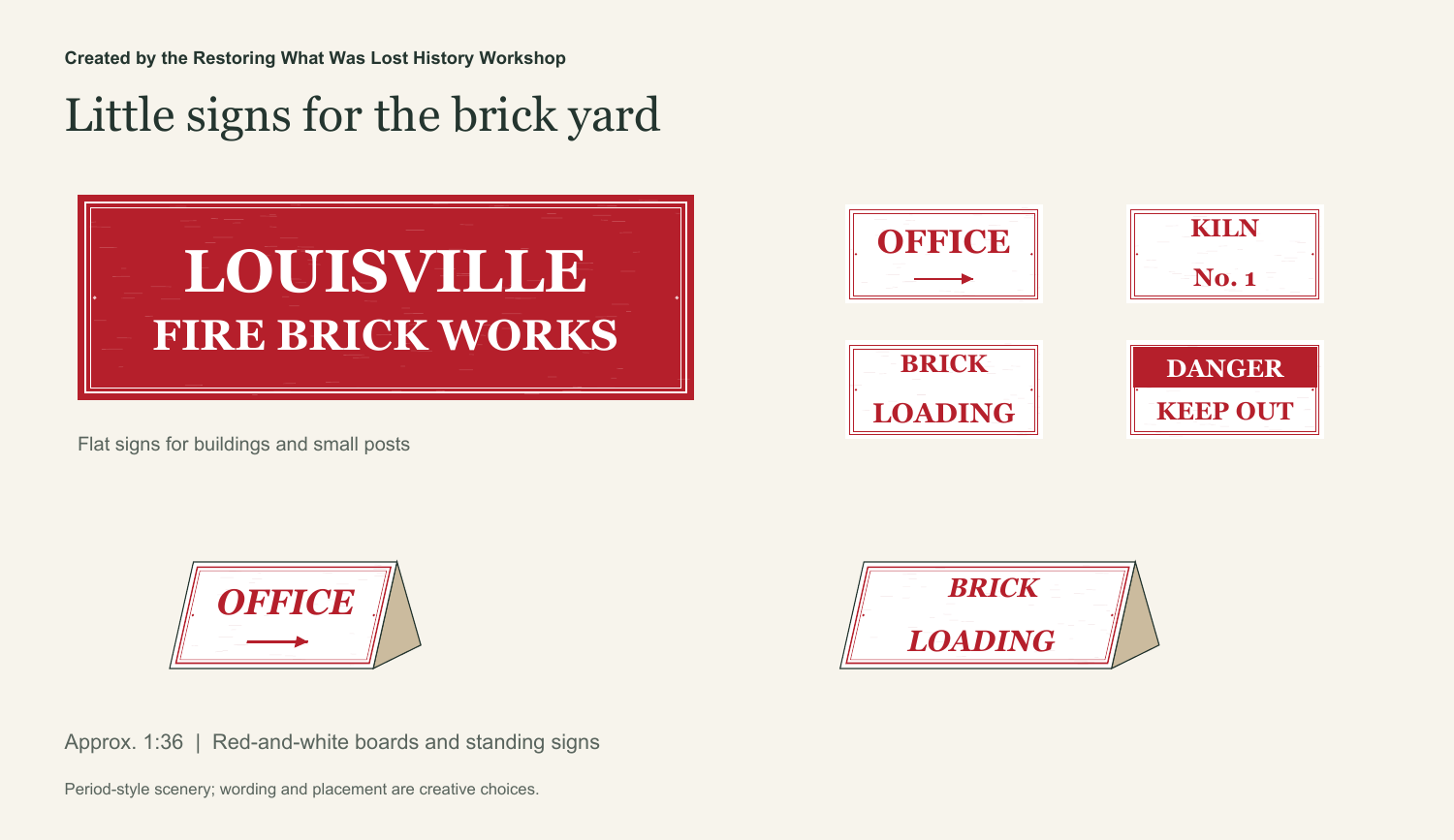
Sort the signs by purpose: naming a place, giving directions, or drawing attention to something. Can one sign do more than one job?
Use red-and-white signs to identify Louisville Fire Brick Works and make a miniature yard easier to understand.
Created by the Restoring What Was Lost History Workshop
Free educational use. Times are estimates; allow extra time for drying, practice, and younger builders.
Use these stages to plan your work alongside the instructions inside the model PDF.
Look through both sheets. Decide which signs will go on a building or post and which folded signs will stand by themselves.
Cut around the rectangles on page one. Glue them to walls, thin card, or small posts. For the railroad crossing, overlap the two strips into an X before mounting.
On page two, score the three blue dashed lines before cutting the outer rectangle. One printed face is upside down so both sides read correctly after folding.
Fold both sign faces outward, bring the base underneath, and glue the tab inside the opposite end. Let it dry, then check that visitors can read it from both sides.
Sort the signs by purpose: naming a place, giving directions, or drawing attention to something. Can one sign do more than one job?
Place a sign in the model and view it from a visitor’s angle. What changes if it is too small, too low, or hidden behind a building?
The company name and colors were supplied for this project. What photograph or document would you need before calling a sign an exact historical reproduction?
Spend 5 minutes noticing the model, 10 minutes exploring the historical context, 20 minutes on a first building stage or measurement activity, and 10 minutes sharing observations. Plan additional sessions for finishing longer builds. The teacher handout includes a lesson plan and learner pages.
The Louisville Fire Brick Works name and red-and-white colors were supplied for this community project. These are historically inspired miniature signs, not verified reproductions of original company signs. Their wording and placement give learners a way to think about communication in a working yard.
Explore the brickmaking storyCreated by the Restoring What Was Lost History Workshop. You’re welcome to print copies for classrooms, family activities, and community displays.