Olive Hill’s brickyards
Olive Hill · Carter County, Kentucky
Look at two plant dates and ask how clay, workers, and rail transportation connected a town to distant markets.
Picture the working place.
Read each picture like a page from an old schoolbook. Match the numbered labels with the notes below, then compare the scene with the photographs and records.
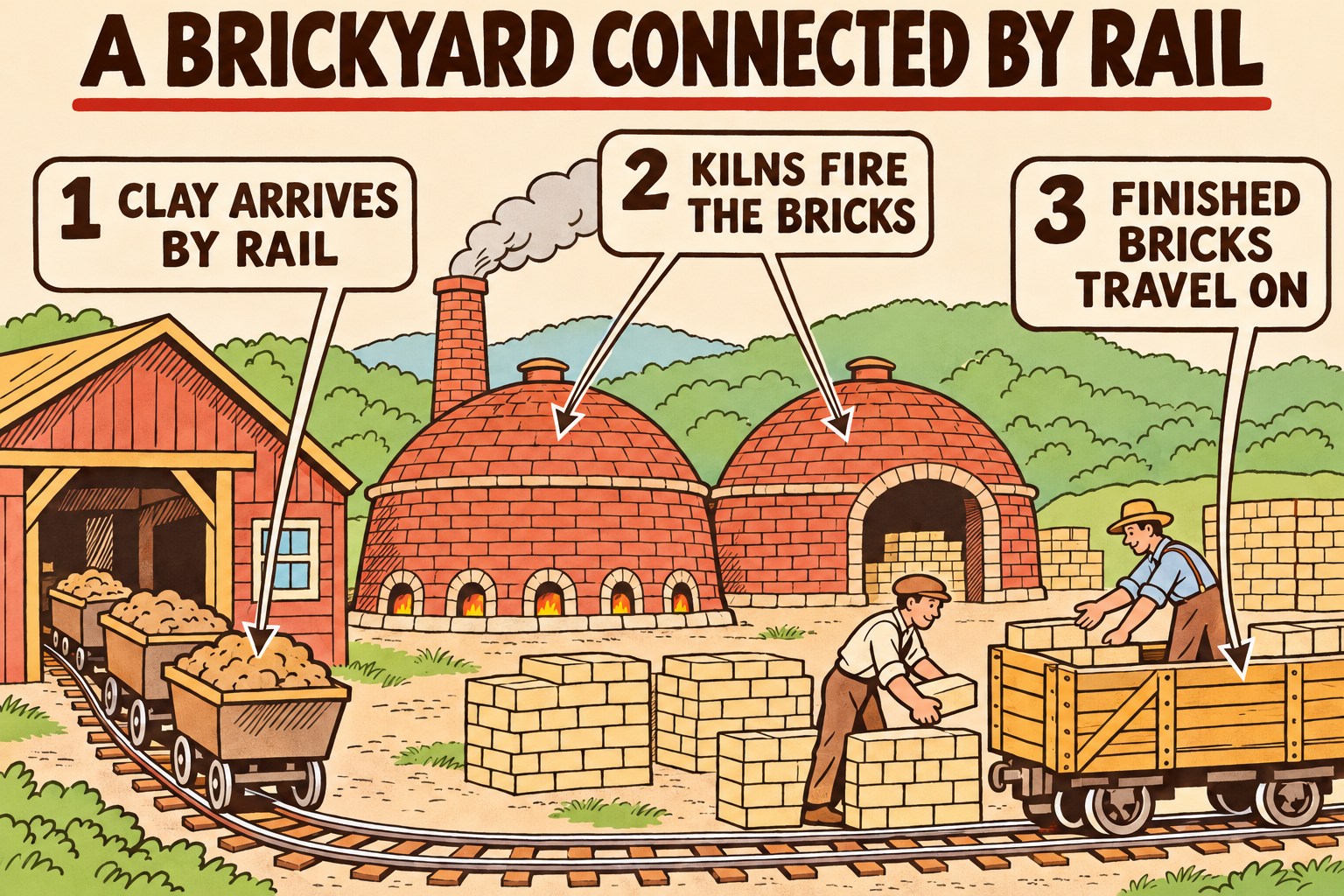
Olive Hill: clay, kilns, and railways
A representative yard connects incoming clay, round kilns, and outgoing bricks. Bricks were formed and dried before firing. The connected track is a teaching device, not the actual track layout of either Olive Hill plant.
Open full illustrationLook for
- Clay arrives by rail. Follow the loaded carts bringing material toward the works.
- Kilns fire the bricks. The round kilns heat bricks that have already been formed and dried.
- Finished bricks travel on. Find the loaded wagon taking the product onward.
Modern AI-generated educational illustration. Created by the Restoring What Was Lost History Workshop.
Historical references: Kentucky Geological Survey: The Clay Deposits of Kentucky (1922), pp. 194–195 · Chesapeake & Ohio Railway: Olive Hill account (1932)
See the place.
Read the date and caption with each image. Historical photographs and modern aerial views show different parts of the story.
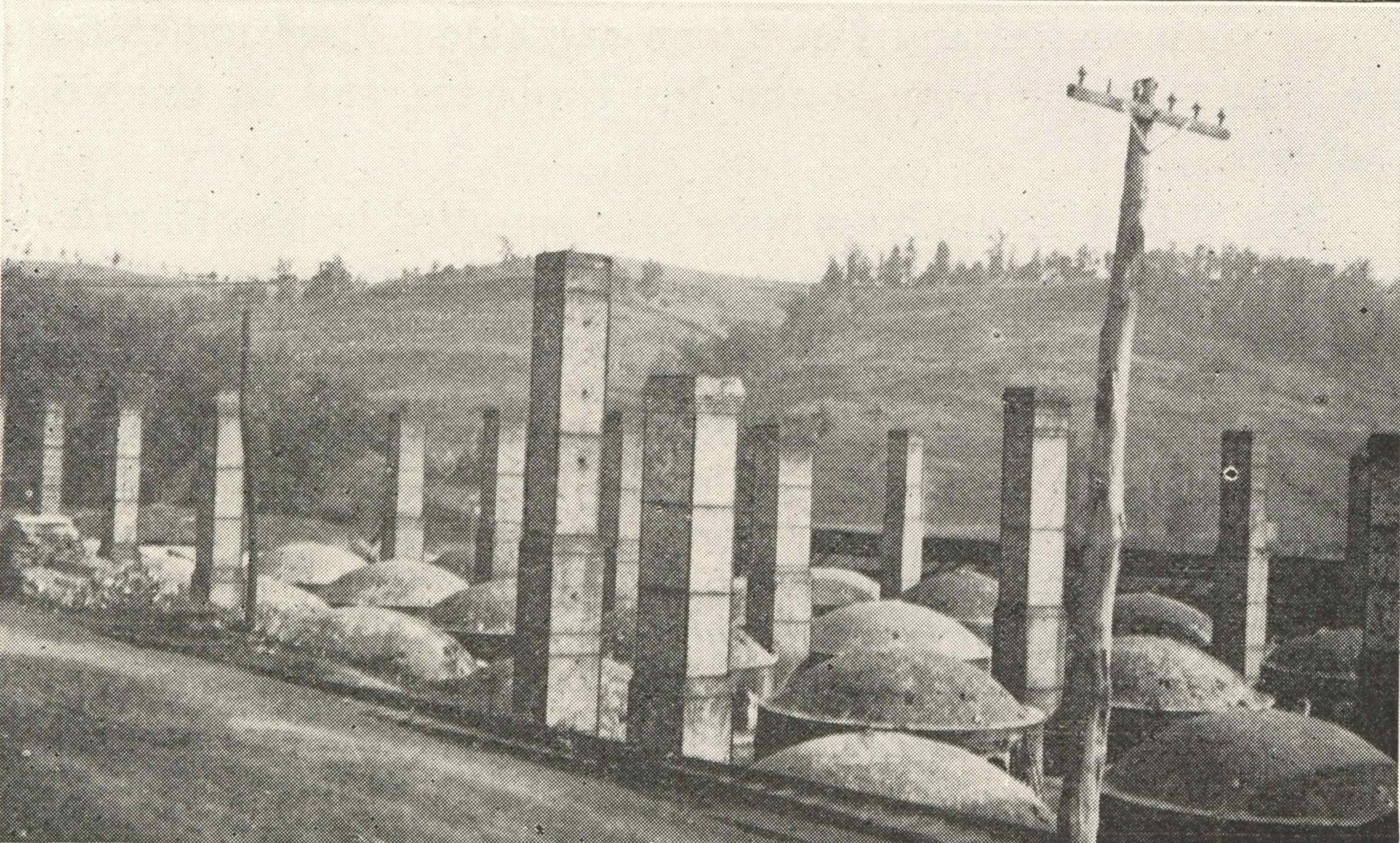
General Refractories’ kilns at Olive Hill, published in 1922. The accompanying report describes clay arriving by narrow-gauge railway and records 27 round downdraft kilns at this works.
Kentucky Geological Survey, The Clay Deposits of Kentucky (1922), Fig. 51, p. 194. View the published photograph ↗ · Public domainFind the place.
Begin with Olive Hill’s town setting and the nearby valley. The location is deliberately broad: the historical report describes where the plants stood, but a more precise map requires matching plant records with later surveys.
Loading the location map…
Olive Hill · town reference
This pin locates Olive Hill. The 1922 report places the two plants north of town, on the valley’s north side. Their precise historical footprints have not been established here, so this is not a factory-site pin.
Olive Hill community coordinates ↗Pins identify the place described in each label. A historical marker or community pin may be separate from the original building. These are research locations, not confirmed visitor entrances.
Start with the record.
A 1932 Chesapeake and Ohio Railway account dates the Olive Hill Fire Brick Company’s plant to 1895 and Harbison-Walker’s Olive Hill plant to 1901. It links the district’s development to fire clay, transportation, and industrial markets. These dates refer to different plants in Olive Hill, not a single company or the Grahn plant.
Based on C&O Magazine: Olive Hill industrial account (1932, archived transcription); 1920 Olive Hill photograph in the Kentucky Historical Society collection.
A few moments in the story.
- 1895
The first of these two plants
Olive Hill Fire Brick Company built the works later known as General Refractories.
Chesapeake & Ohio Railway account, 1932 ↗ - 1901
A separate neighboring works
Harbison-Walker completed its own plant. The two companies and their starting dates should be kept distinct.
Chesapeake & Ohio Railway account, 1932 ↗ - 1922
Clay, railways, and round kilns
The geological survey followed the material through preparation, forming, drying, and firing. It described a nine-day firing cycle at General Refractories, a snapshot of the process at that time.
The Clay Deposits of Kentucky, pp. 194–195 ↗
What makes one place a useful home for an industry?
Use this explanatory drawing to investigate the idea. Choose an observation below the picture.
Choose a way to look closer
Find the material
Locate clay at the start. Add a question about the distance between a mine and a plant.
Where a material is found matters, but the diagram does not show an actual mine location or delivery route.
Notice. Sketch. Ask a better question.
Choose one prompt for a family conversation, or use all three as a classroom investigation.
Make a two-entry timeline: 1895 and 1901. Write the correct plant beside each date.
Choose clay supply, transport, workers, or customers. Explain why your chosen factor would matter to a manufacturer.
Read the source as both a history account and a promotion. Which statements could you check against a map, dated photograph, or company record?
The lesson PDF pairs teaching notes with learner pages. Allow around 45 minutes for discussion and the activity, adapting the pace to your group. Model building, when chosen, takes additional time.
Download lesson: Local brickyards: clay, work, and connectionsRead the sources.
Compare what a source says with what the diagram shows. Record uncertainties instead of filling them with guesses.
- C&O Magazine: Olive Hill industrial account (1932, archived transcription)
Period railway account with separate 1895 and 1901 plant dates; read its promotional purpose in context.
- 1920 Olive Hill photograph in the Kentucky Historical Society collection
View the collection’s photograph record for evidence of a particular plant at a particular time.
Help fill in the picture.
A family photograph, an old plant map, or a memory with a name and date can help us understand this place more clearly. Tell us what you know and where the information came from.
Share a history lead →Keep the connections going.
Created by the Restoring What Was Lost History Workshop.