
The brickyard at Grahn
Grahn · Carter County, Kentucky
Connect Louisville Fire Brick Works with the Carter County clay and community behind its products.
Picture the working place.
Read each picture like a page from an old schoolbook. Match the numbered labels with the notes below, then compare the scene with the photographs and records.
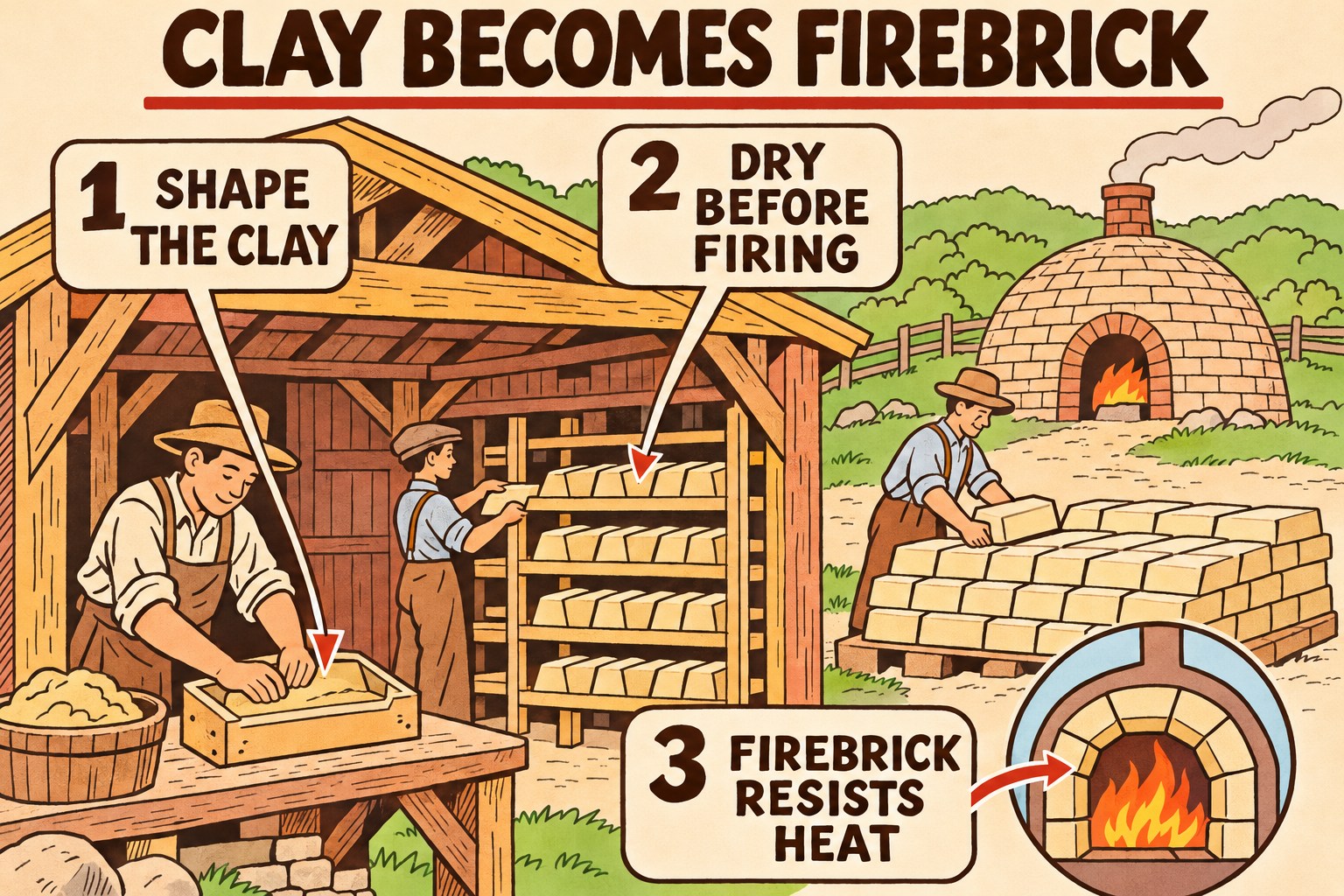
Grahn: from clay to firebrick
The shaping scene illustrates hand molding for special firebrick shapes; standard bricks were also pressed. The cartoon brings several jobs together in a representative arrangement, not an exact reconstruction of the Grahn works.
Open full illustrationLook for
- Shape the clay. Hand molding allowed workers to make special shapes for particular needs.
- Dry before firing. Moisture leaves the shaped clay before it goes into the kiln.
- Firebrick resists heat. After firing and cooling, the bricks can serve in demanding industrial heat.
Modern AI-generated educational illustration. Created by the Restoring What Was Lost History Workshop.
Historical reference: Kentucky Geological Survey: Grahn firebrick works (1922), p. 190
See the place.
Read the date and caption with each image. Historical photographs and modern aerial views show different parts of the story.
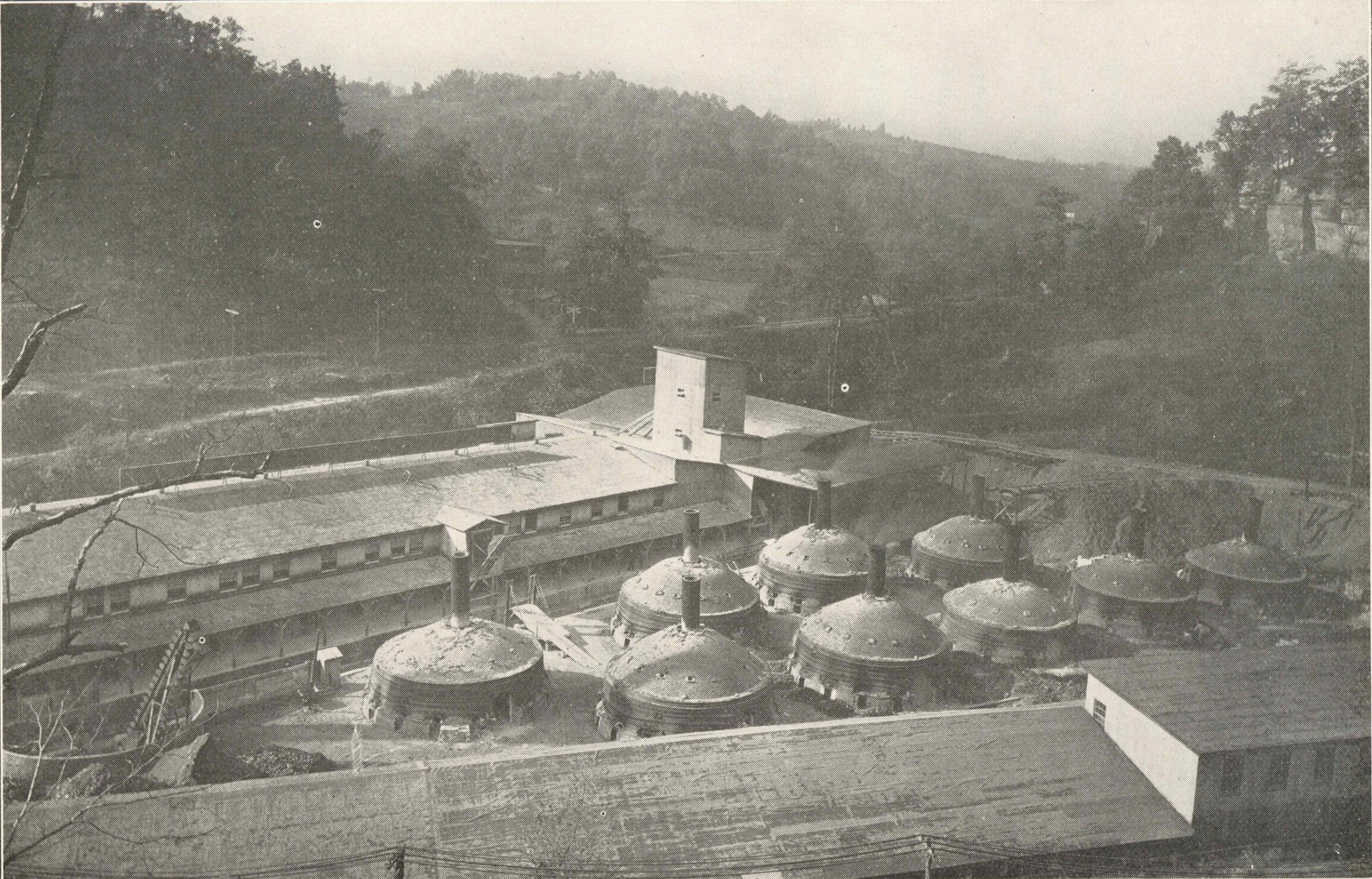
Louisville Fire Brick Works at Grahn, in a photograph published in 1922. Look at how the industrial buildings and yard sit within the valley.
W. R. Jillson, in Heinrich Ries, The Clay Deposits of Kentucky (Kentucky Geological Survey, 1922), Fig. 49, p. 189. View the published photograph ↗ · Public domain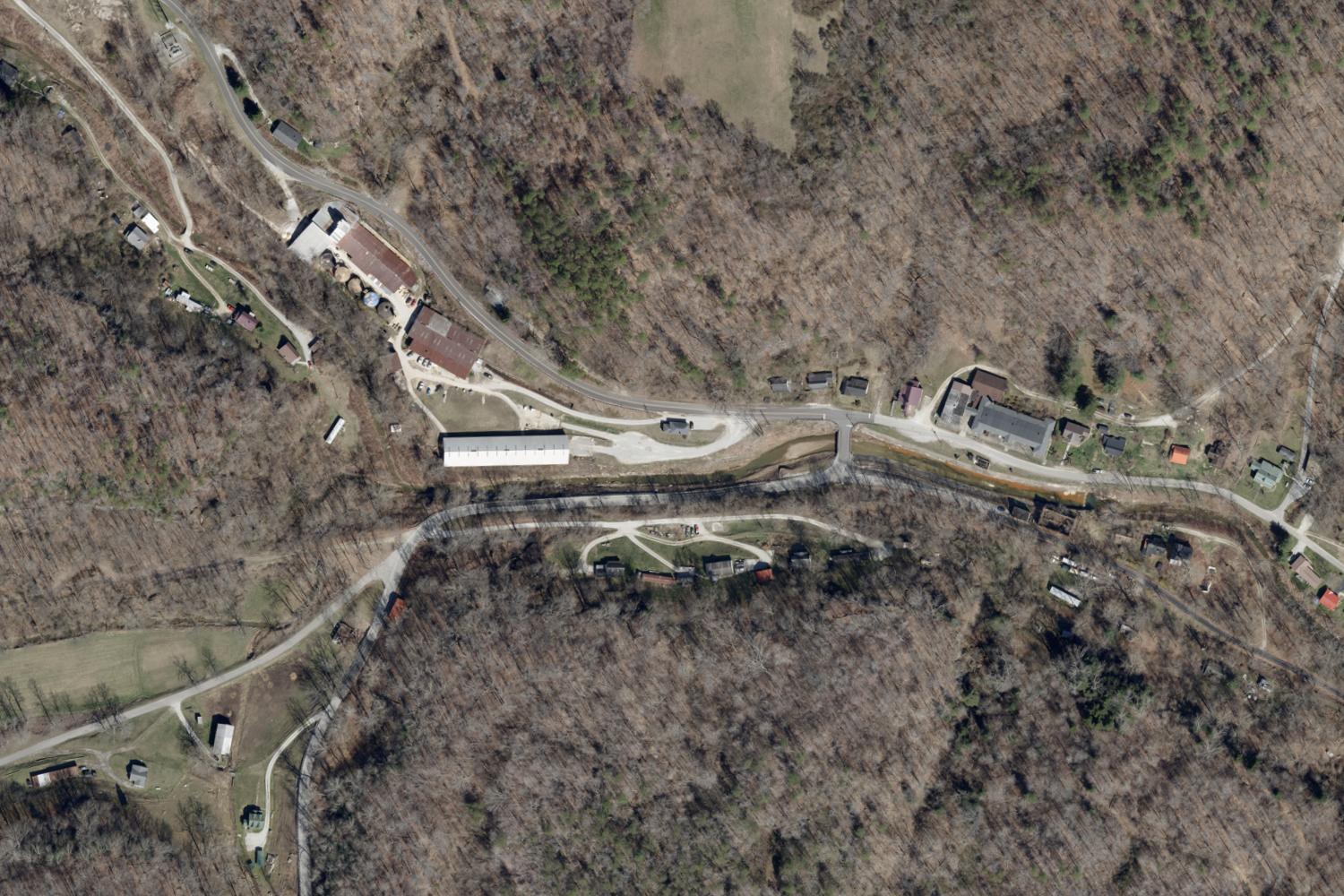
A modern aerial view around the Grahn plant address. Compare the valley setting with the 1922 photograph; the views have different angles and do not establish the boundaries of the earlier works.
KyFromAbove, Kentucky Division of Geographic Information. Imagery source ↗ · CC0 imageryFind the place.
Locate the plant address on Grahn Road, then switch between street and aerial views. The photograph, map, and company history offer three different ways to understand the site.
Loading the location map…
Grahn plant address
The company lists 3462 Grahn Road. This point comes from a Kentucky Public Service Commission filing for that address; it locates the plant address, not a surveyed outline of the 1913 works or a visitor entrance.
PSC filing with the plant address and coordinates ↗Pins identify the place described in each label. A historical marker or community pin may be separate from the original building. These are research locations, not confirmed visitor entrances.
Start with the record.
Louisville Fire Brick Works’ company history dates construction of its Grahn plant to 1913, beside the clay mines. Earlier, Carter County clay had been shipped to its Louisville plant. The company describes both pressed standard bricks and hand-molded special shapes. The Grahn story connects a local material with skilled work and customers beyond the community.
Based on Louisville Fire Brick Works: company history; 1920 Grahn photograph in the Kentucky Historical Society collection.
A few moments in the story.
- 1889
A company begins with firebrick
The company traces its origins to an agreement to supply refractory brick for locomotive fireboxes. That origin predates its Grahn plant.
Louisville Fire Brick company history ↗ - 1913
Building near the clay
Construction began on the Grahn works near the company’s Carter County mines.
Louisville Fire Brick company history ↗ - 1922
The works in a geological survey
Kentucky’s clay report published the Jillson photograph shown here. It provides a period view of the physical works to compare with the company’s written history.
The Clay Deposits of Kentucky, p. 189 ↗
Why make a product close to the material it is made from?
Use this explanatory drawing to investigate the idea. Choose an observation below the picture.
Choose a way to look closer
Begin with a material
Find the clay at the start of the diagram. Name questions you would ask about where it came from.
A product’s story begins before it reaches a factory. Geography helps connect raw material, work, and transport.
Notice. Sketch. Ask a better question.
Choose one prompt for a family conversation, or use all three as a classroom investigation.
Sketch a route from clay to customer. What would you need to move between stages?
Why might a customer need a specially shaped brick instead of a standard rectangle?
Write one question about Grahn that a company history might answer and another that a family interview might help answer.
The lesson PDF pairs teaching notes with learner pages. Allow around 45 minutes for discussion and the activity, adapting the pace to your group. Model building, when chosen, takes additional time.
Download lesson: Local brickyards: clay, work, and connectionsRead the sources.
Compare what a source says with what the diagram shows. Record uncertainties instead of filling them with guesses.
- Louisville Fire Brick Works: company history
The company’s account of the Louisville and Grahn plants and manufacturing methods.
- 1920 Grahn photograph in the Kentucky Historical Society collection
View the collection’s photograph record and compare it with this explanatory diagram.
Help fill in the picture.
A family photograph, an old plant map, or a memory with a name and date can help us understand this place more clearly. Tell us what you know and where the information came from.
Share a history lead →Keep the connections going.
Created by the Restoring What Was Lost History Workshop.